Did we give up too easily?

We used to automate processes. Back in the early days, before we called ourselves Information Technology, Information Systems, or Management Information Systems, that’s what we did.

We didn’t optimize processes, orchestrate them, or develop metrics to assess their performance. We obliterated them, replacing them with computer programs that called on humans only when an input or decision was required the computer couldn’t handle on its own.

To be fair, we didn’t always do this all that well. Some of these automations sped up business processes that contributed little business value beyond keeping some people busy who otherwise might have caused all sorts of mischief.

There were also quite a few cases where the program paved a metaphorical cow path, faithfully reproducing in automated form every process step that had previously been executed by a bored human being, even if these steps had nothing at all in common with what an engineer might construct if given the goal and a blank sheet of paper.

But even with these flaws, IT’s predecessors delivered orders-of-magnitude improvements in business efficiency. And then Something happened, and suddenly, overnight, IT became the biggest bottleneck to business improvement.

My theory is that Something = Methodology, but perhaps I’m being unfair. I’m not, after all, a business historian, so while I lived through some of the mayhem, my personal mayhem experience isn’t a statistically significant random sample.

Based on my personal experience, direct and second-hand through colleagues, here’s the way process automation happened back in the good old days we neocodgers see in the warm glow of imperfect memory:

Someone from the business would drop by EDP (electronic data processing, IT’s ancient forebear), sit on the corner of a programmer’s desk, and ask, “Can you get the computer to do x?”

After a short discussion the answer was either yes or no, and if it was no, a longer discussion usually led to a useful alternative the computer was capable of.

The programmer would go off and program for a week or so and call the business person back to review the results and suggest course corrections. In not all that long the computer had automated whatever it was the business person wanted automated.

Usually, in the interim, other notions occurred to the business person, who, while reviewing how the solution to the initial request was progressing, would ask, “Can you also get the computer to do y?”

Over a span of a few years these solutions to business problems accumulated, turning into the big legacy systems many businesses still rely on.

If we’d only had the wit to call what we were doing a methodology and label it Agile.

Had we done so we might have avoided quite a lot of the discreditation that happened to IT during the years of waterfall wasteland that, starting in the early 1980s, transformed us from the department that automated stuff, generating enormous tangible business benefits, to the Department of Failed Projects.

For that matter, had we continued in our quest to automate the bejeezus out of things in our naively Agile sort of way, disciplines such as Lean and Six Sigma might never have achieved their current level of prominence.

Not that Lean and Six Sigma are terrible ideas. In the right contexts they can lead to solid business improvement.

What they’ve turned into for some businesses, though, are Strategic Programs, and religions for some practitioners. For these devoted adherents they’re the answer to all questions, before actually asking the questions.

What they’ve also turned into is a sort of IT-less shadow IT — a way to improve business processes without any need to involve IT, and, more important, without having to ask the Department of Failed Projects to deliver very much.

Let’s imagine the executive team at some enlightened (or misguided — your call) company reads the above and, convinced, calls to ask how best to return IT to its process automation roots. What would a modern version look like?

Mostly, it would treat each process as a black box that turns inputs into outputs. IT’s job would be to understand what the inputs and outputs are, and to develop, through a combination of inference and listening to the experts, an algorithm that reliably turns the defined inputs into the desired outputs.

That’s it — the entire methodology in one paragraph, understanding that “algorithm” can hide a lot of complexity in its four syllables.

Might this work? Beats me. It’s an idea I’m just starting to play with. Next week I might strenuously disagree with this week’s me.

Don’t hesitate to weigh in.
In one of the more satisfying bits of recent sociological research, Michael Kasumovic and Jeffrey Kuznekoff discovered a correlation between poor performance and abusive behavior toward women in on-line gaming.

It’s tempting to extrapolate to the workplace. It’s even more tempting to use “Speaking of losers,” as my transition to continuing last week’s look at Gartner’s bimodal IT model.

It’s tempting, but unfair. Just because Gartner showed up 15 years after the party began doesn’t mean it’s missed the boat. After all, for many in our industry there is no boat until Gartner floats one.

Anyway …

To its credit Gartner has (finally) recognized the need for what it calls “bimodal IT.” But it hasn’t explored a challenging, near-inevitable consequence of establishing two radically different working styles — dueling cultures. The fast one will inevitably look like the CIO’s favorite son while those relegated to supporting the company’s systems of record will feel like red-headed stepchildren.

I’m not the only one concerned about the consequences of bimodal IT. In a Comment, long-time correspondent Stephen Bounds pointed to a piece by Simon Wardley (very perceptive writer; recommended) that’s highly critical of the whole bimodal approach.

Wardley’s concern is that two modes aren’t enough. He proposes three: Pioneers (Gartner’s high-speed branch), Town Planners (Gartner’s slow-speed branch), and an intermediate mode he calls “Settlers” that industrializes the work of the Pioneers.

If IT is limited to Pioneers and Town Planners, Wardley argues, you’ll end up accumulating a bunch of functional but poorly constructed junk that, over a span of perhaps five years, will turn into “spaghetti junction.”

The Settler role is reminiscent of a process proposed in this space back in 2002 — the Access Tangle Replacement Methodology (ATRM). ATRM applies an architectural perspective to the collection of point solutions shadow IT and other Pioneering groups put together, using them to define the aggregate requirements for a more broadly-based architecturally sound environment.

But in modern businesses, Settlers aren’t needed to clean up the messily constructed systems created by IT’s fast-mode Pioneers, because IT’s Pioneers don’t build poorly constructed systems. Modern IT’s fast mode uses some form of DevOps and delivers well-constructed software that doesn’t need cleaning up.

Settlers are still needed, but to bring systems built by shadow-IT projects into conformance with IT standards. It’s a vital role, but a different one.

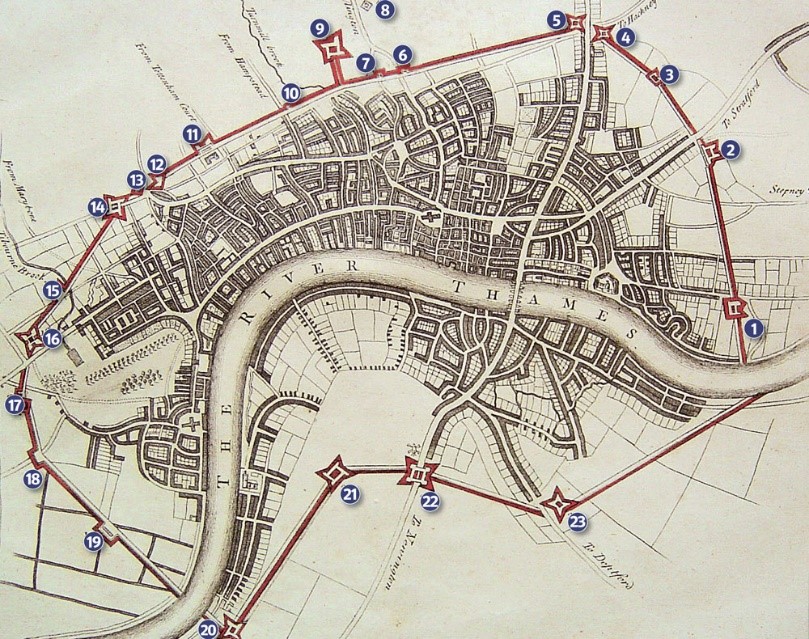
Left to their own devices, Settler-supported shadow IT and fast-mode Agile/DevOps teams create a very different type of mess — an unplanned landscape. Metaphorically, it would be as if a large number of individual real-estate developers built wherever they pleased, with no zoning laws or urban planning to constrain them.

It would, that is, be like medieval London.Map of Medieval London

The so-called best-practice solution to this challenge (so-called because it’s way too early in the game to enshrine one solution as best) is called “scaled Agile.” Without endorsing or critiquing any specific approach to scaling Agile, my colleagues and I are discovering that many of the organizations attempting to scale Agile find themselves less agile than they were with waterfall.

Trimodal IT offers an alternative.

My old ATRM fixed medieval-London-ish systems through an approach we might call “scaled refactoring.”

Scaled refactoring leaves Agile/DevOps teams to do what they do best, which is to quickly develop small solutions to well-defined business problems. It leaves shadow IT’s pioneers to build rough-and-ready prototypes, which an IT Settler function converts to well-plumbed and wired production-ready applications.

In the aggregate these provide the requirements and specifications for industrial-strength enterprise-scale systems that metaphorically turn medieval London into a modern metropolis.

There’s just one problem with this model: It’s horrible — horrible because it recreates the same giant technology replacement programs that so often suck all the oxygen out of a business. I’ve abandoned ATRM as a bad idea because it relies on the successful execution of a very large, waterfall-style project that looks a lot like a traditional systems conversion.

Ugh.

Wardley provides the sketch of a solution that fits a different, important concept that’s emerging in our industry: Agile enterprise technical architecture management (ETAM).

Wardley describes his approach as progressive theft: Settlers “steal” applications from Pioneers to industrialize them; Town Planners steal them from settlers to incorporate them into the enterprise technical architecture.

Town Planning’s (aka ETAM’s) success, that is, comes from ongoing incremental misdemeanors. This is good. Massive remediation efforts are by definition Big Projects, which means they usually turn into felonious failures.

* * *

We still haven’t addressed the cultural challenge of fast-mode/slow-mode conflict. Instead, we made it worse by adding a third culture to the mix. We’ll get there next week. Unless, of course, something else distracts me.